 xunaawen@outlook.com
  WhatsApp:+86 13698446041
 Custom Certificates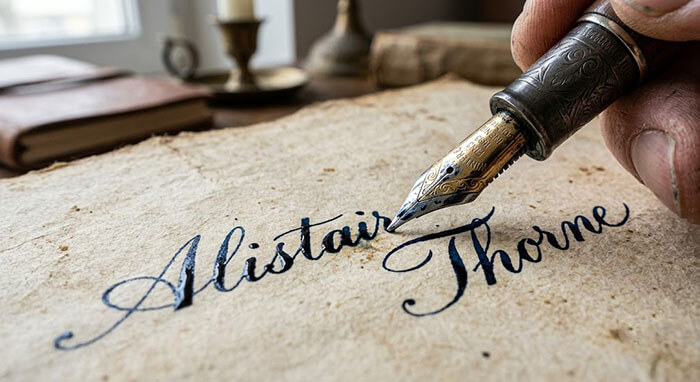
When you examine a historical document—whether it is a rare piece of political history, an old military commission, or an antique piece of theater memorabilia—your eyes are naturally drawn to the bottom of the page. That is where you find the human connection: the signature.
A signature is highly unique. It represents a single split-second in time where a historical figure pressed pen to paper.
For prop masters creating prop design sets or collectors seeking flawless document reproduction, replicating these hand-signed markings is a massive technical challenge. If a signature looks like it was simply printed by a modern laser printer, it looks flat and lifeless. Here is a look behind the scenes at how we analyze and replicate the fluid artistry of historical signatures.
1. Capturing the Ink Pooling and Pressure Gradients
When a person signs their name with a traditional fountain pen, a steel nib, or a classic quill, the ink does not flow perfectly evenly like a digital line.
-
The Physics of a Pen: As the writer moves their hand downward, they apply more pressure, creating a thicker line and forcing more ink onto the page. When they move the pen upward or sweep across a curve, the line becomes razor-thin, and the ink lightens.
-
The Replica Process: We don’t just use basic image stamps. Our artists use high-resolution vector matrices to capture these exact pressure variances, ensuring the replicated signature displays natural dark “pooling” areas and lighter stroke lines that mimic real liquid ink.
2. Recreating the “Bleed and Feather” Effect
On authentic parchment paper or vintage cotton rag sheets, ink reacts chemically with the organic paper fibers. Under a magnifying glass, you can see that the edges of a signature are not perfectly smooth; the ink naturally bleeds or “feathers” microscopic distances into the surrounding paper pulp over time.
To ensure absolute realism in our historical replicas, our design pipeline simulates this exact fiber interaction. We match the ink profile to the specific paper texture selected, preventing the signature from looking like a flat sticker sitting on top of the sheet.
Digital Flat Image  --> Perfectly smooth, rigid edges, monochromatic color (Looks Fake).
Replicated Vector   --> Variable ink thickness, natural pooling, fiber feathering (Looks Real).
3. Maintaining the Speed of the Stroke
The hardest element of a signature to copy is its emotional energy. A slow, traced line looks shaky, rigid, and unnatural. A real signature is executed with rapid, confident muscle memory, creating clean, swept flourishes and sharp endings.
Our custom vector tracing process maps the dynamic vector paths of the original autograph, capturing the velocity of the stroke. This ensures that the final printed result retains the elegant momentum, spirit, and soul of the writer.
Experience True Precision Crafting
At DocuReplicas, we believe that an authentic look requires looking past the surface. By studying the pressure, paper fibers, and fluid dynamics of ink, we deliver prop documents and historical replacements that can stand up to the closest inspections.
👉 Need Flawless Historical Accuracy? Start Your Project with DocuReplicas!